Choosing the right home inspector can make a major difference in how useful your inspection ultimately is. Whether you’re buying a Florida home, evaluating your current property, or completing an inspection requested for homeowners insurance, you want an inspector who is qualified, thorough, communicative, and able to explain their findings clearly.
If you’ve been searching for the best home inspector near me or comparing home inspection companies in Florida, start by asking the right questions.
The most important questions cover the inspector’s licensing and experience, the scope of the inspection, report quality, communication, significant findings, and what happens after the inspection.
At My Safe Home Inspection, we provide professional Full Home Inspections and insurance-focused inspections throughout Florida with licensed inspectors, detailed digital reports, internal Quality Assurance, and statewide service.
Why Choosing the Right Home Inspector Matters
A home inspection provides information that can affect major decisions.
For buyers, an independent inspection can help identify significant property concerns before closing. The Consumer Financial Protection Bureau recommends choosing an inspector with a reputation for honesty and thoroughness and encourages buyers to attend the inspection when possible.
For Florida homeowners dealing with insurance, the right inspector also matters because specialized reports such as 4 Point and Wind Mitigation Inspections must document specific property characteristics accurately.
Different inspections serve different purposes, so your first goal should be choosing an inspector with experience performing the service you actually need.
Questions to Ask Before the Home Inspection
1. Are You Licensed and What Qualifications Do You Have?
This should be one of your first questions.
Florida requires individuals performing home inspections for compensation to hold a home inspector license. Initial licensure involves approved education, a department-approved examination, background screening, fingerprinting, and required liability insurance.
Ask your inspector:
- Are you currently licensed in Florida?
- How long have you been inspecting homes?
- What additional training or certifications have you completed?
- Do you receive ongoing education?
- Do you have specialized experience with the inspection I need?
Professional certifications from industry organizations may provide additional training, but they should complement, not replace, the Florida license required to perform home inspections.
At My Safe Home Inspection, our inspection process emphasizes licensing, training, standardized procedures, and quality control.
2. How Much Experience Do You Have With This Type of Property?
A single-family home, condominium, older property, newer construction home, and coastal property can each present different inspection considerations.
Ask whether the inspector regularly works with homes similar to yours.
Experience can be especially valuable with Florida properties because inspectors may encounter conditions associated with:
- High humidity
- Heavy rainfall
- Hurricanes and tropical storms
- Wind-driven rain
- Intense heat
- Coastal exposure
- Older housing systems
You should also ask whether the inspector has experience with the specific inspection you’re scheduling.
A Full Home Inspection, 4 Point Inspection, Wind Mitigation Inspection, and Roof Certification Inspection each have different scopes and documentation requirements.
3. What Does the Inspection Include and Exclude?
Do not assume every inspection covers the same things.
Ask the inspector to explain the scope before your appointment.
A typical Full Home Inspection may evaluate major accessible components such as:
- Roof
- Exterior
- Structure
- Electrical system
- Plumbing
- HVAC
- Interior
- Kitchen
- Bathrooms
- Attic
- Garage
- Crawl space when applicable and accessible
However, specialized testing or services may fall outside the standard scope.
Depending on the company, services such as these may require separate inspections:
- Mold assessment
- Wood-Destroying Organism inspection
- Septic inspection
- Pool inspection
- Sewer scope
- Engineering evaluation
- Specialized environmental testing
Knowing what is and is not included helps prevent misunderstandings after the inspection.
4. How Long Should the Inspection Take?
There is no single correct inspection time for every property.
The length of an inspection can depend on:
- Inspection type
- Home size
- Property age
- Number of systems
- Property condition
- Accessibility
- Number of findings
- Documentation requirements
A focused insurance inspection may take considerably less time than a comprehensive Full Home Inspection.
Instead of judging an inspector solely by the number of minutes spent at the property, ask how their process works and what is included.
An inspection should take enough time to complete the applicable scope carefully and document the findings appropriately.
To learn more about how long different types of inspections take, check out our blog: How Long Does a Home Inspection Take? Here’s What to Expect
5. Can I Attend the Home Inspection?
If you’re scheduling a Full Home Inspection as a buyer, ask whether you can attend.
Being present can be valuable because you may be able to:
- See important findings firsthand
- Learn where major systems are located
- Ask questions
- Better understand the written report
- Hear explanations in context
The Consumer Financial Protection Bureau specifically recommends attending the inspection when possible because it can make the report easier to interpret and gives buyers an opportunity to ask questions.
For shorter insurance-focused inspections, the process may be different, so ask the inspection company what they recommend.
Questions to Ask During the Home Inspection
6. Which Findings Are the Most Important?
A long inspection report does not necessarily mean a home is in terrible condition.
Some findings may involve:
- Routine maintenance
- Minor repairs
- Aging components
- Safety concerns
- Significant defects
- Conditions requiring specialist evaluation
Ask your inspector to help you understand which findings deserve the most attention.
Useful questions include:
- Is this primarily maintenance-related?
- Is this a safety concern?
- Should a specialist evaluate it?
- Does this appear urgent?
- Is this something I should monitor?
The inspector’s role is to explain the observed condition, not decide whether you should purchase the property.
7. What Maintenance Should I Plan for?
A good Full Home Inspection can provide useful information beyond immediate defects.
Ask your inspector about observable conditions that may require routine maintenance or monitoring.
Depending on the home, that may involve:
- Roof maintenance
- HVAC servicing
- Plumbing fixtures
- Exterior sealants
- Drainage
- Gutters
- Moisture management
- Other accessible components
The inspector should distinguish between observable maintenance needs and predictions they cannot reasonably make.
For example, an inspector can discuss the current observable condition of a roof but cannot guarantee the exact date it will need replacement.
8. Can You Explain This Finding in Plain Language?
Inspection reports often contain technical terminology.
You should feel comfortable asking what something means.
Useful follow-up questions include:
- What did you observe?
- Why is it important?
- Is this common?
- What type of professional should evaluate it?
- Is there anything I should do immediately?
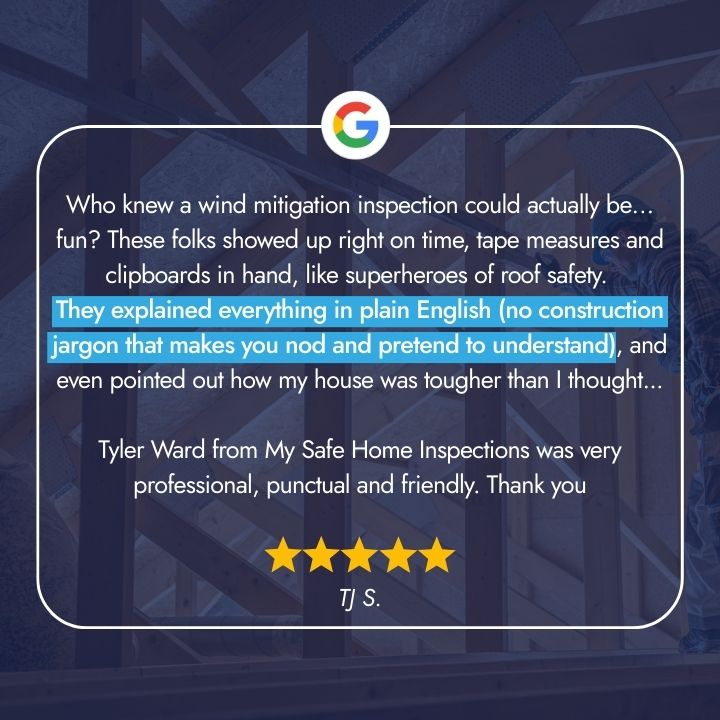
The best home inspector is not simply someone who identifies concerns. They should also communicate those observations in a way the client can understand.
At My Safe Home Inspection, our goal is to provide clear reporting and straightforward explanations without unnecessary technical jargon.
Questions to Ask After the Home Inspection
9. When Will I Receive My Inspection Report?
Ask about report turnaround before scheduling.
This is particularly important in real estate transactions because buyers may have contractual inspection deadlines.
Ask:
- When will the report be delivered?
- Is it digital?
- Does it include photographs?
- Can I access it from my phone or computer?
- Who receives a copy?
- Can I ask questions afterward?
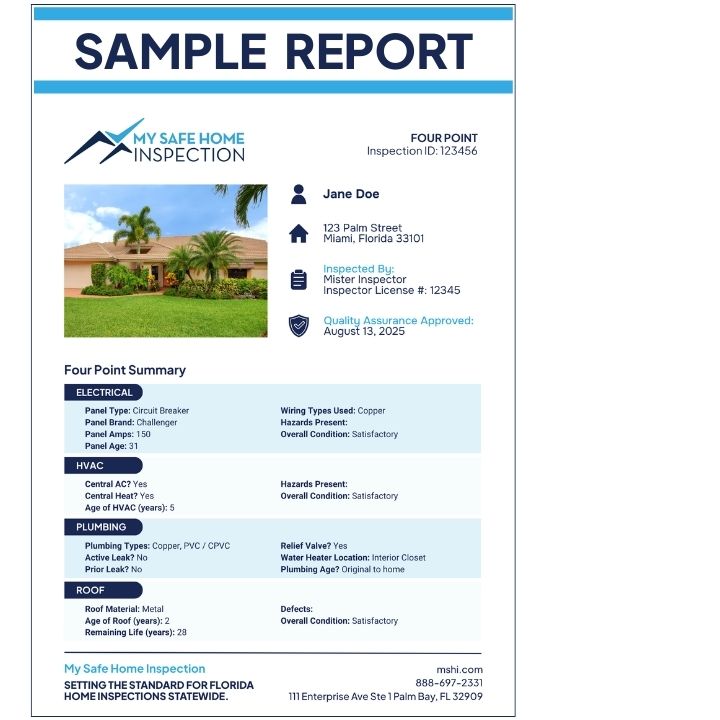
My Safe Home Inspection typically delivers inspection reports within 24 hours in most cases.
Our reports are provided digitally and include supporting documentation appropriate to the inspection performed.
When authorized by the customer, insurance-related reports may also be shared with the appropriate insurance professional.
10. What Should I Do With Findings That Need Repair?
If the inspector identifies a concern, ask what type of qualified professional would normally evaluate or repair it.
Depending on the issue, that might include:
- Roofer
- Electrician
- Plumber
- HVAC contractor
- Structural engineer
- General contractor
- Other qualified specialist
Your inspector may or may not provide specific company recommendations.
If you receive a contractor referral, it is reasonable to ask whether the inspector or inspection company has any financial relationship with that business.
Regardless of how you find a contractor, do your own due diligence.
Depending on the trade and project, consider checking:
- Licensing requirements
- Insurance
- Reviews
- References
- Written estimates
- Permit requirements
- Warranty terms
- Business history
The goal is to choose a qualified professional based on your own evaluation rather than relying solely on one referral.
Bonus Question: Do You Carry the Required Insurance?
Florida’s licensing requirements include commercial general liability insurance for home inspectors.
Homeowners can ask whether the inspector has appropriate current coverage.
This is another useful way to distinguish established professional inspection practices from informal or unqualified services.
How to Find the Best Home Inspector Near You
Searching “best home inspector near me” will probably give you many results.
Do not choose solely based on who appears first or offers the lowest price.
Instead, evaluate:
- Active Florida licensing
- Experience
- Type of inspections offered
- Customer reviews
- Report quality
- Sample reports
- Communication
- Turnaround time
- Quality assurance
- Scheduling availability
For homebuyers, the CFPB recommends looking for an independent inspector with a reputation for honesty and thoroughness.
A strong inspection company should also clearly explain what its inspection does and does not cover.
Ask to See a Sample Inspection Report
A sample report is one of the best tools for evaluating an inspection company before hiring it.
Look for:
- Clear organization
- Photographs
- Plain-language descriptions
- Logical categories
- Easy navigation
- Clearly identified concerns
A report that is difficult to understand before you hire the company probably will not become easier when you’re reviewing the condition of your own home.
My Safe Home Inspection provides detailed digital reporting designed to make inspection findings easier for homeowners, buyers, and insurance professionals to review.
Read Reviews, But Look for Patterns
Online reviews can help you evaluate customer experience, but do not rely on one review alone.
Look for repeated comments about:
- Thoroughness
- Professionalism
- Communication
- Scheduling
- Inspector knowledge
- Report quality
- Customer service
- Responsiveness
Patterns across a large group of customers are generally more useful than one unusually positive or negative experience.
Make Sure You're Scheduling the Right Inspection
One of the most important questions to ask may actually be: “Which inspection do I need?”
Florida homeowners may encounter several inspection types.
Full Home Inspection
A Full Home Inspection provides a broad evaluation of major accessible systems and components.
It is commonly used by buyers, sellers, and homeowners who want a better understanding of property condition.
4 Point Inspection
A 4 Point Inspection focuses specifically on:
- Roof
- Electrical
- Plumbing
- HVAC
It is commonly requested for homeowners insurance underwriting.
Wind Mitigation Inspection
A Wind Mitigation Inspection documents qualifying construction features designed to reduce hurricane and windstorm damage.
Florida’s Department of Financial Services explains that qualifying mitigation features documented on the state’s Uniform Mitigation Verification Inspection Form may result in discounts on the windstorm portion of a homeowners insurance premium. Actual savings vary based on the documented features and insurer.
Roof Certification Inspection
A Roof Certification Inspection provides focused documentation about the observable condition of the roof when that information is needed by a homeowner or insurance carrier.
These reports are not interchangeable.
Before scheduling, confirm what you need with your real estate professional, insurance agent, or insurance carrier.
Questions to Ask About Insurance-Focused Inspections
If you’re scheduling an inspection for homeowners insurance rather than a real estate purchase, your questions should be slightly different.
Ask:
- Which report will I receive?
- Does my carrier need a 4 Point Inspection?
- Should I also get a Wind Mitigation Inspection?
- What documentation should I have ready?
- Will the inspector need attic access?
- How quickly will the report be available?
- Can the report be sent to my insurance agent?
- What happens if additional documentation is needed?
For Wind Mitigation Inspections, accurate documentation matters because qualifying features must be reported and supported appropriately before an insurer determines the applicable windstorm credits.
Can a Home Inspection Save You Money?
Potentially, but it depends on the type of inspection and situation.
During a Home Purchase
A Full Home Inspection may identify concerns that affect your purchasing decision or prompt additional negotiations, depending on your contract.
The CFPB notes that inspection findings may give buyers an opportunity to negotiate repairs or, when allowed by the purchase agreement, reconsider the transaction.
There is no guarantee that an inspection will save a specific amount of money.
For Homeowners Insurance
A Wind Mitigation Inspection may document features that qualify for insurance credits on the windstorm portion of the policy.
The amount depends on the home’s verified mitigation characteristics and the insurer.
A 4 Point Inspection, by contrast, is primarily used for underwriting and does not automatically generate an insurance discount.
Red Flags When Choosing a Home Inspector
A few warning signs may indicate that you should keep looking.
Be cautious if an inspector:
- Cannot verify appropriate licensing
- Will not explain the scope
- Refuses to provide any information about the report format
- Makes guarantees about finding every possible defect
- Guarantees specific insurance savings
- Claims the inspection makes a home completely safe
- Rushes you to hire affiliated repair companies
- Cannot explain their findings clearly
Home inspections have limits, and a trustworthy inspector should be willing to explain those limits.
Why Florida Experience Matters
Florida homes face environmental conditions that can influence roofing, HVAC systems, exterior materials, moisture, and other building components.
These may include:
- High humidity
- Heavy rain
- Hurricanes
- Tropical storms
- Wind-driven rain
- Strong UV exposure
- Coastal conditions
Florida experience is particularly valuable when the inspector regularly performs both real estate and insurance-focused inspections throughout the state.
Why Choose My Safe Home Inspection?
My Safe Home Inspection has been serving Florida since 2007 and provides residential and insurance-focused inspections throughout the state.
Our services include:
- Full Home Inspections
- 4 Point Inspections
- Wind Mitigation Inspections
- 4 Point and Wind Mitigation Combos
- Roof Certification Inspections
- Real estate inspection services
Homeowners, buyers, sellers, real estate professionals, and insurance professionals choose our team for:
- Licensed Florida inspectors
- Statewide service
- Detailed digital reports
- Internal Quality Assurance
- Insurance-ready reporting
- Fast report turnaround
- Convenient scheduling
- Experienced customer service
- Consistent inspection processes
Our goal is to provide clear information so you understand both what was inspected and what the findings mean.
Proudly Serving Homeowners and Buyers Across Florida
My Safe Home Inspection provides professional home inspection services throughout Florida.
Our statewide network serves communities including:
- Miami
- Hollywood
- Fort Lauderdale
- Pompano Beach
- Boca Raton
- West Palm Beach
- Port St. Lucie
- Vero Beach
- Sebastian
- Palm Bay
- Orlando
- Tampa
- St. Petersburg
- Lakeland
- Cape Coral
- Jacksonville
- Deltona
- And surrounding Florida communities
Whether you’re buying a property or completing an insurance inspection, our team can help you schedule the appropriate service.
Frequently Asked Questions
What should I ask a home inspector before hiring them?
Ask about Florida licensing, experience, inspection scope, exclusions, report format, turnaround time, and whether they have experience with your type of property and inspection.
Are home inspectors required to be licensed in Florida?
Yes. Florida requires individuals performing home inspection services for compensation to be appropriately licensed. The state’s initial licensing requirements include approved education, an examination, background screening, fingerprints, and required liability insurance.
Should I attend my home inspection?
If you’re a homebuyer and the inspection company permits it, attending can be valuable. The CFPB recommends attending when possible because you can ask questions and better understand the written report.
How long should a home inspection take?
There is no universal time. Inspection length varies based on the service, home size, age, condition, accessibility, and number of findings. A Full Home Inspection generally requires more time than a focused insurance inspection.
How quickly should I receive my inspection report?
Turnaround varies by company. Ask before scheduling, particularly if you’re working within a real estate or insurance deadline. My Safe Home Inspection typically delivers reports within 24 hours in most cases.
Should my home inspector recommend contractors?
You may ask what type of professional should evaluate a finding. If the inspector provides a specific referral, you can also ask whether there is any financial relationship with that contractor and conduct your own due diligence.
Can an inspector tell me whether I should buy the house?
The inspector’s role is generally to document and explain the physical condition of the property. The decision to purchase is ultimately yours, with input as appropriate from your real estate, financial, and legal professionals.
Can a home inspector guarantee there are no hidden problems?
No. A professional home inspection evaluates observable and accessible conditions at the time of inspection. No inspector can guarantee that every hidden or future defect will be discovered.
Can a Wind Mitigation Inspection reduce my insurance premium?
Qualifying mitigation features may reduce the windstorm portion of a Florida homeowners insurance premium. The inspector documents the features and your insurance carrier calculates the applicable savings.
Schedule Your Florida Home Inspection
Finding the best home inspector near you is about more than comparing prices.
Ask about licensing, experience, inspection scope, communication, reporting, turnaround time, and what happens when problems are identified. The answers can tell you a great deal about the quality of the inspection experience you are likely to receive.
My Safe Home Inspection provides professional Full Home Inspections and insurance-focused inspections throughout Florida with licensed inspectors, detailed digital reports, statewide scheduling, internal Quality Assurance, and fast turnaround.
Contact My Safe Home Inspection today to schedule your inspection and get clear, professional information about your Florida property.